

When does bloating usually show up for you — morning, evening, or after specific situations? What They Say About Your Gut Health : What Your Bloating Pattern Says About Your Gut Health: Bloating doesn’t happen randomly. Most people think it does — that it’s just something the body “does sometimes.” But when you slow down and really observe it, bloating follows patterns. Time of day. Certain meals. Specific situations. Even emotions. Your gut is constantly communicating. Bloating is one of its most common signals — not to scare you, but to inform you.From my experience, once people stop asking “Why am I bloated today?” and start asking “When and how does my bloating show up?”, everything changes.
This article is regularly updated to reflect current wellness practices in 2026.

Who This Guide Is For
This guide is for anyone who:
- Eats “healthy” but still feels bloated
- Notices bloating at specific times of day
- Feels fine some days and uncomfortable on others
- Wants to understand their gut instead of fighting it
It’s especially helpful for beginners who feel confused because there’s no single food to blame.
Who Should Be Careful
If bloating is severe, painful, sudden, or persistent despite lifestyle changes, professional guidance is important. This article focuses on daily patterns and gut awareness, not medical diagnosis.
Why Bloating Patterns Matter More Than the Food Itself
Most people try to fix bloating by cutting foods.
First dairy. Then gluten. Then carbs. Then “everything.”
But bloating patterns often have more to do with timing, digestion speed, stress, and habits than the food alone.
What usually goes wrong is focusing on what you eat instead of how, when, and in what state you eat.
Your bloating pattern is like a map. Once you read it, the gut becomes far easier to support.

What Your Bloating Pattern Is Actually Telling You
1️⃣ Bloating Immediately After Eating
If your stomach feels tight or swollen within minutes of eating, this usually points to digestive readiness, not food intolerance.
This pattern often appears when:
- Meals are rushed
- Food is eaten under stress
- Chewing is minimal
- Large portions are eaten quickly
Your gut may simply be saying: “Slow down. Let me catch up.”
When people improve meal pace and posture, this type of bloating often reduces without changing food choices.
2️⃣ Bloating One to Two Hours After Meals
This delayed bloating often relates to how food is being broken down, not the stomach itself.
It can happen when:
- Meals are very mixed and heavy
- Portions are larger than usual
- Digestion feels sluggish
The gut isn’t failing — it’s working overtime.
This pattern improves when meals are simpler, portions are balanced, and digestion has time to do its job.
3️⃣ Evening Bloating That Wasn’t There in the Morning
Many people wake up flat and go to bed bloated.
This pattern usually reflects accumulated strain, not one bad meal.
By evening, the gut has handled:
- Multiple meals
- Stress
- Sitting for long hours
- Inconsistent hydration
Bloating here often signals that digestion needs more rhythm, not restriction.
4️⃣ Bloating That Appears on “Healthy Eating” Days
This one confuses a lot of people.
You eat salads, fruits, whole grains — and feel worse.
This doesn’t mean healthy food is bad. It often means:
- Fiber intake increased too fast
- Raw foods dominated the day
- Digestion hasn’t adapted yet
The gut usually needs time and gentleness to adjust to dietary upgrades.
5️⃣ Bloating That Changes Day to Day
If bloating is unpredictable, stress is often involved.
Stress changes digestion speed, enzyme release, and gut movement. Even with the same meals, digestion can feel different depending on your mental state.
This is why some days feel fine and others don’t — even when food doesn’t change.
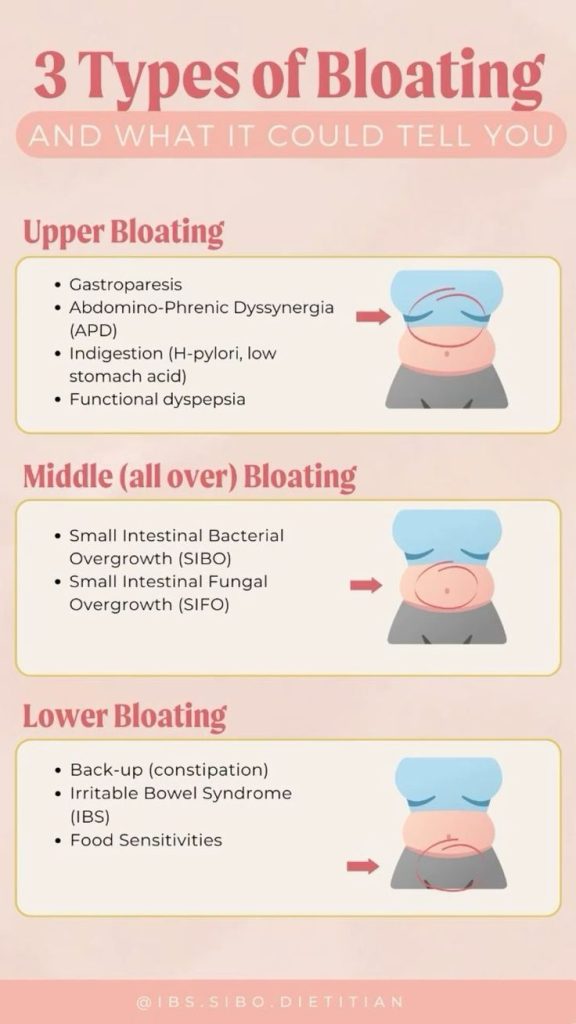
6️⃣ Lower Belly Bloating That Feels Heavy
Lower abdominal bloating often reflects slower movement through the digestive tract.
It’s commonly associated with:
- Inconsistent meal timing
- Low movement during the day
- Holding digestion instead of responding to urges
This pattern improves when daily rhythm becomes more consistent.
7️⃣ Bloating That Improves Overnight
If bloating disappears by morning, that’s a positive sign.
It means digestion is eventually completing its work — just slower than ideal during the day.
Many beginners panic here, but this pattern often responds well to small daily adjustments rather than drastic changes.
8️⃣ Bloating After Eating Too Fast
Fast eating doesn’t just affect fullness — it affects air intake, chewing quality, and digestion signaling.
This pattern often improves simply by slowing meals and breathing between bites.
No food removal needed.
9️⃣ Bloating Linked to Specific Situations, Not Foods
If bloating shows up during:
- Travel
- Social events
- Busy workdays
The trigger is often environmental, not nutritional.
Your gut responds to routine disruption more than we realize.
🔟 Bloating That Comes With Mental Tension
When bloating feels tied to anxiety or overthinking, the gut is responding to the nervous system.
This doesn’t mean it’s “in your head.” It means the gut and brain are doing what they’re designed to do — communicate.
Supporting calm often supports digestion more than changing meals.
Reality Check
Bloating patterns are information, not failures.
Some patterns change quickly. Others take time. Progress usually looks like:
- Less intensity
- Shorter duration
- Faster recovery
That still counts as improvement.
What You May Notice Over Time
As you understand your bloating patterns, many people notice:
- Fewer surprises
- More predictable digestion
- Less fear around meals
- Improved comfort without restriction
Awareness itself becomes a powerful tool.
Conclusion
Bloating isn’t your enemy.
It’s feedback.
When you stop fighting it and start listening to it, digestion becomes something you work with, not against. Your gut isn’t broken — it’s speaking in patterns.
Once you learn the language, everything feels calmer.
Small Steps Matter
Instead of asking:
“Why am I bloated?”
Try asking:
“When does it show up?”
“What was happening before?”
“How does it change over the day?”
Those answers matter more than cutting foods.
Also Read More : Weight Loss Diet: What It Is, How It Works & What to Expect
7 Simple Weight Loss Diet Rules That Actually Work for Busy People
Gut-Friendly Foods You Can Eat Daily for Better Digestion
Frequently Asked Questions
Q1. Does bloating always mean poor gut health?
No. Occasional bloating is normal and often pattern-based.
Q2. Why do I bloat even on healthy diets?
Rapid changes, fiber load, and digestion pace matter more than food labels.
Q3. Is evening bloating common?
Yes, very. It often reflects daily accumulation rather than one meal.
Q4. Can stress change bloating patterns?
Absolutely. Stress directly affects digestion rhythm.
Q5. Should I remove foods to fix bloating?
Not always. Observing patterns is often more helpful.
Q6. Why does bloating feel different day to day?
Sleep, hydration, movement, and stress all influence digestion.
Q7. Is morning flatness a good sign?
Yes. It often means digestion completes overnight.
Q8. Can eating speed affect bloating?
Yes. Faster eating often increases bloating.
Q9. Does posture affect digestion?
Yes. Slouching can slow digestive movement.
Q10. What your bloating pattern says about your gut health?
It reveals how your digestion responds to timing, stress, and routine — not just food.


