
Which gut health myth surprised you the most today?
You start eating “healthy.”
More salads. More fruits. Less junk food.
Yet somehow, your digestion feels worse than before.
Bloating increases. Meals feel heavy. Your stomach makes strange noises. And you begin wondering, “Am I doing something wrong?”
This is where gut health myths quietly step in.
Most beginners don’t suffer because they lack effort — they suffer because they follow popular advice that sounds healthy but doesn’t work for everyone. Social media tips, viral reels, and half-true wellness rules often confuse people more than they help.
This topic matters because digestion is deeply personal. What works for one person may create discomfort for another. Beginners especially need clarity, not complicated rules.
This guide is for anyone who wants simple, realistic gut health understanding — without fear, strict diets, or medical promises.
From my experience, learning what not to believe helped me simplify my eating habits and feel more comfortable over time.
This article is regularly updated to reflect current wellness practices in 2026.
Who This Guide Is For
Many people start their gut health journey with good intentions but too much confusion. For example, someone may suddenly cut out all carbs or eat raw foods all day, expecting instant digestive comfort — and end up feeling worse.
This guide is for:
- People looking for simple daily gut-friendly habits
- Beginners who want sustainable routines, not extreme changes
Who Should Be Careful
If someone has a diagnosed digestive condition, blindly following online advice can cause unnecessary stress. For instance, avoiding entire food groups without guidance can backfire.
Those with specific medical conditions should always seek personal guidance before making major changes.
Why Gut Health Myths Are So Common Today
Gut health information is everywhere — blogs, reels, podcasts — but much of it is oversimplified or exaggerated.
For example, one influencer says dairy is bad. Another says fruit sugar destroys digestion. A third claims fasting fixes everything. Beginners try to follow all of it and feel overwhelmed.
What’s happening:
- Advice spreads faster than understanding
- One-size-fits-all tips dominate wellness content
Why people struggle:
- They blame themselves when results don’t match expectations
- They keep switching methods instead of building consistency
What usually goes wrong:
- Too many changes at once
- Fear-based eating
- Ignoring body signals

Gut Health Myths – What Actually Helps
1. Myth: “Healthy Foods Should Never Cause Bloating”
Many beginners believe that if a food is healthy, it should feel light immediately. When bloating happens after eating fruits, vegetables, or whole grains, panic sets in.
For example, someone adds raw salads at dinner every day and feels heavy afterward. Instead of questioning timing or portions, they assume something is “wrong” with their gut.
In reality, digestion is a process. Some foods need time, adjustment, and proper preparation.
What helps:
- Introducing fiber slowly
- Observing how food feels at different times of day
- Understanding that mild discomfort doesn’t mean failure
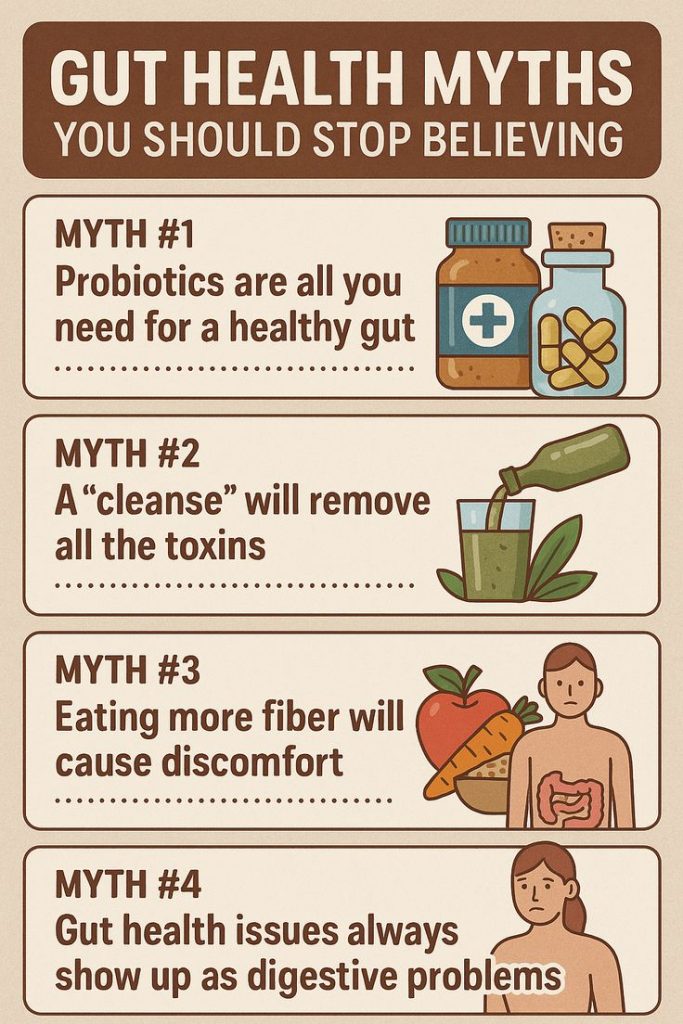
2. Myth: “More Fiber Always Means Better Digestion”
Fiber is important, but beginners often add too much too fast.
Imagine switching from refined foods to large bowls of beans, oats, and vegetables overnight. The gut isn’t ready, leading to gas and discomfort.
I have seen this work better for many people when fiber is increased gradually and paired with proper hydration.
What helps:
- Slow transitions
- Balanced meals instead of overload
- Listening to how your body responds
3. Myth: “Cutting Entire Food Groups Fixes Digestion”
Some believe removing gluten, dairy, or carbs automatically improves digestion. While certain people feel better with restrictions, many beginners remove foods unnecessarily.
For example, cutting carbs may reduce bloating temporarily but increase fatigue and cravings.
A gentler approach:
- Reduce, don’t eliminate
- Test foods one at a time
- Focus on balance, not fear
4. Myth: “Gut Health Improves Overnight”
Beginners often expect fast results. When digestion doesn’t improve in a week, they abandon routines.
Digestion reflects daily habits, not quick fixes.
What helps:
- Consistent meal timing
- Calm eating environment
- Patience with small changes
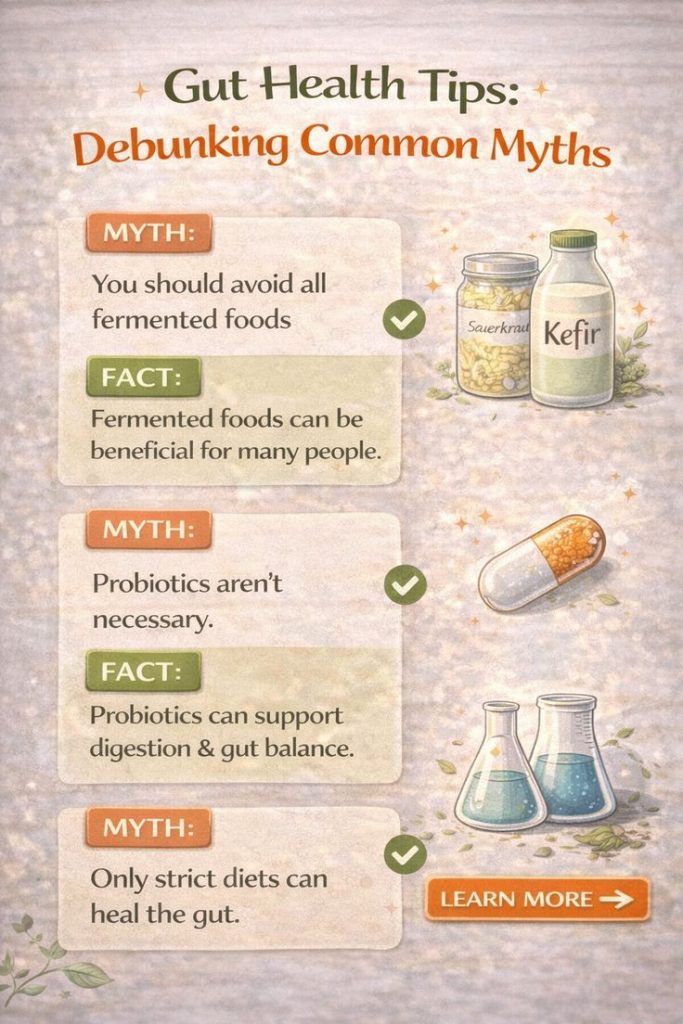
5. Myth: “Probiotics Are Mandatory for Everyone”
Supplements are often marketed as magic solutions. Beginners assume they must take probiotics to fix digestion.
But for many, basic habits work better first.
Examples:
- Regular meals
- Chewing properly
- Simple foods
Supplements may support some people, but they are not a starting requirement.
6. Myth: “Eating Clean Means Eating Raw”
Raw foods are often promoted as superior. Beginners switch to raw diets and feel bloated and cold.
Cooking can actually make foods easier to digest.
What helps:
- Warm meals
- Light cooking methods
- Seasonal eating
7. Myth: “Skipping Meals Helps Gut Rest”
Skipping meals may reduce symptoms temporarily, but long gaps can confuse digestion.
For example, irregular eating can lead to acidity or sluggish digestion later.
What helps:
- Regular meal rhythm
- Light meals instead of skipped meals
- Gentle routines
8. Myth: “Digestive Sounds Mean Something Is Wrong”
Beginners often panic over gurgling sounds. These sounds usually mean digestion is happening.
Stress about normal body signals often worsens discomfort.
Understanding your body reduces anxiety-driven symptoms.
9. Myth: “One Perfect Diet Exists for Everyone”
There is no universal gut diet. Cultural foods, routines, and preferences matter.
The best diet is the one you can follow calmly and consistently.
10. Myth: “Ignoring Small Symptoms Is Fine”
Minor bloating, heaviness, or irregularity often gets ignored until it worsens.
Early attention helps build better habits before problems grow.
REALITY CHECK
Not everyone experiences digestion the same way. For example, a habit that feels calming for one person may feel heavy for another.
Results vary from person to person.
Small steps matter more than quick changes.
Consistency supports long-term wellness.
QUICK REFERENCE TABLE
| Habit | How Often | Beginner-Friendly |
| Eat slowly | Daily | Yes |
| Cook meals lightly | Daily | Yes |
| Regular meal timing | Daily | Yes |
| Reduce food fear | Ongoing | Yes |
WHAT RESULTS CAN YOU EXPECT OVER TIME?
With consistent habits, people may notice:
- Reduced digestive discomfort
- Better meal awareness
- Improved food confidence
- Calmer eating patterns
No timelines. No promises. Just gradual support.
CONCLUSION
Gut health confusion doesn’t come from lack of effort — it comes from believing the wrong things. Once myths are removed, digestion often feels simpler and calmer.
Focus on understanding your body instead of chasing perfection.
SMALL STEPS MATTER
Start with one habit today.
Bookmark this guide.
Explore a related gut health post when ready.
Also Read More : Weight Loss Diet: What It Is, How It Works & What to Expect
7 Simple Weight Loss Diet Rules That Actually Work for Busy People
Gut-Friendly Foods You Can Eat Daily for Better Digestion
FAQ SECTION
Q1: Are gut health myths harmful?
They can create unnecessary fear and confusion.
Q2: Should beginners avoid fiber?
No, but it should be increased slowly.
Q3: Do gut health myths affect digestion?
Yes, stress and misinformation can worsen digestion.
Q4: Is bloating always bad?
Not always — context matters.
Q5: Can gut health improve naturally?
Gentle habits often support improvement over time.
Q6: Are supplements necessary?
Not always for beginners.
Q7: Should I follow online gut diets?
Use them as guidance, not rules.
Q8: How long does digestion adapt?
It varies for each person.
Q9: Is there a perfect gut diet?
No single diet fits everyone.
Q10: How do gut health myths affect beginners?
Gut health myths often confuse beginners and delay simple progress.